





Pupil premium strategy statement
This statement details our school’s use of pupil premium funding to help improve the attainment of our disadvantaged pupils.
It outlines our pupil premium strategy, how we intend to spend the funding in this academic year and the effect that last year’s spending of pupil premium had within our school.
School overview
| Detail | Data |
| School name | Holbrook Primary School |
| Number of pupils in school | 621 |
| Proportion (%) of pupil premium eligible pupils | 36% |
| Academic year/years that our current pupil premium strategy plan covers (3 year plans are recommended) | 2025-2028 |
| Date this statement was published | 31.12.25 |
| Date on which it will be reviewed | December ‘26 December ‘27 December ‘28 Termly reviews to inform planning |
| Statement authorised by | Amy Bills |
| Pupil premium lead | Dale Richards |
| Governor / Trustee lead | Ruth Westbrook |
Funding overview
| Detail | Amount |
| Pupil premium funding allocation this academic year | £332,485 |
| Pupil premium funding carried forward from previous years (enter £0 if not applicable) | £0 |
| Total budget for this academic year | £332,485 |
Part A: Pupil premium strategy plan
Statement of intent
At Holbrook Primary School, all members of staff and governors accept responsibility for all pupils recognising that a number of pupils within the school population, some of whom are not eligible for pupil premium funding, may at any point during their school career require additional support and intervention. We are committed to meeting our pupils’ pastoral, social and academic needs in a nurturing environment. As with every child in our care, a child who is in receipt of the pupil premium is valued, respected and entitled to develop to their full potential. Our strategy is unashamedly ambitious, we aim to not leave anything to chance and believe that as well as improving academic outcomes through education we can enhance the social mobility of the children in our care.
Irrespective of their background or the challenges they face, our intention is that all pupils make good progress and achieve high attainment across all subject areas. The focus of our pupil premium strategy is to support disadvantaged pupils, as well as non-disadvantaged, to achieve that goal including progress for those who are already high attainers. The activity we have outlined in this statement will support all pupils’ needs, with particular emphasis on access for those who are eligible for funding.
We will consider the challenges faced by vulnerable pupils, such as those who have a social worker and are young carers. The activity we have outlined in this statement is also intended to support their needs, regardless of whether they are disadvantaged or not.
High quality first teaching is at the heart of our approach, with a focus on areas in which disadvantaged pupils require the most support. This is proven to have the greatest impact on closing the disadvantage attainment gap and at the same time will benefit the non-disadvantaged pupils in our school. Implicit in the intended outcomes detailed below, is the intention that non-disadvantaged pupils’ attainment will be sustained and improved alongside progress for their disadvantaged peers.
Our approach will be responsive to common challenges and individual needs, rooted in robust diagnostic assessment, not assumptions about the impact of disadvantage. The approaches we have adopted complement each other to help pupils excel. To ensure they are effective we will:
- ensure disadvantaged pupils are challenged in the work that they’re set
- act early to intervene at the point need is identified
- adopt a whole school approach in which all staff take responsibility for disadvantaged pupils’ outcomes and raise expectations of what they can achieve
Challenges
This details the key challenges to achievement that we have identified among our disadvantaged pupils.
| Challenge number | Detail of challenge |
| 1 | End of 2024/2025 attainment in RWM (Combined) data update: PP Non-PP 1 17% 46% 2 36% 63% 3 40% 51% 4 34% 32% 5 28% 50% 6 KS2 RWM 35% 42% In KS1, Y1 the biggest gap between PP and non PP was in writing In year 2, Reading was a success with only 4% difference between PP and Non -PP. 32% of PP in yr 2 achieved expected standards in Maths and Reading but not writing. Writing (27%) was the largest gap. Internal assessments of KS2 pupils show that some gaps have closed. Particularly in lower key stage 2 (year 4). In KS2 assessments there was either no gap or minimal gap between PP and Non PP in individual subject assessments. In all year groups, writing is a key focus for improvement academic attainment. |
| 2 | The majority of our pupil premium families also belong to other vulnerable groups such as speaking English as an additional language, being from underachieving minority ethnic groups and or, have special educational needs. This co-morbidity means that some disadvantaged pupils have complex learning needs. Whilst 14% of the wider school population has a SEN, 24% of the pupil premium pupils have SEN. Approximately 30% of our pupils join school mid key stage, mid-year, often with little-to-no previous schooling. As a result, they enter significantly below the expected standard for their age across the curriculum. |
| 3 | Observations and discussions with pupils suggest low levels of literacy in parts of the community which means that families are less well equipped to support their children with reading/homework |
| 4 | Our typical child joins our school (particularly EYFS) with language acquisition well below that of their peers. In addition, English is not their first language and is often only used during school hours. |
| 5 | Due to cultural complexities, not all families that are eligible for PP apply. |
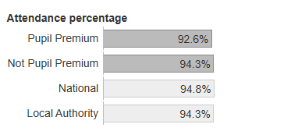
| 6 | The absence rate across the academic year 2024/25 was 6.3%, which is slightly higher than the primary school national average (5.2%). However, the absence rate for disadvantaged pupils was 7.4%, compared to 5.7% absence for their non-disadvantaged peers. Similarly, throughout 2024-25, 18.9% of pupils were persistently absent. However, 22.5% of disadvantaged pupils were persistently absent, compared to 15.4% of their non-disadvantaged peers. |
| 7 | Pupils have limited experiences outside of the home and the community which, in turn, narrows their vocabulary and limits their background knowledge and ability to make connections. |
| 8 | Mental health and well being The social and emotional learning needs (as well as the mental health) of disadvantaged children is a barrier to achievement. This was exacerbated by the Covid 19 pandemic and for many of our disadvantaged now also due to the cost-of-living crisis. |
Intended outcomes
This explains the outcomes we are aiming for by the end of our current strategy plan, and how we will measure whether they have been achieved.
| Intended outcome | Success criteria |
| Improved oral language skills and vocabulary amongst disadvantaged pupils. | Assessments and observations indicate significantly improved oral language amongst disadvantaged pupils. This is evident when triangulated with other sources of evidence, including engagement in lessons, book scrutiny and ongoing formative assessment. Voice 21 approach to the teaching of oracy is embedded, and delivered with quality and consistency School is part of the Coventry Oracy Hub School is a Centre of Excellence for Oracy (Voice 21) |
| Improved outcomes in writing | % of children leaving EYFS with ELG in Writing is in line with the national average 56% of disadvantaged children at the end of Y1 achieving Writing objectives for Y1 96% of year 2 have legible handwriting 70% of year 3 and 4 can accurately spell year 3 and 4 common exception words. Children will use tier 2 and 3 words in their writing and adapt writing to suit form and intended audience The % of children reaching the national expected standards in writing to be above national attainment for disadvantaged by end of KS2. |
| Improved outcomes in Reading | % of children leaving EYFS with ELG in Reading is in line with the national average % of children passing phonics screening check at the end of Y1 is in line with the national average % of children passing the phonics screening check at the end of Y2 is in line with the national average 80% of children able to read 90+ words correct per minute by the end of Y2 % of children reaching the expected standard in reading at the end of KS2 is in line with the national average |
| Improved fluency and calculation strategies in Mathematics. | % of children leaving EYFS with ELG in Number is in line with the national average. Assessment and evaluation information, including visiting lessons and talking with pupils, shows that children have a repertoire of strategies to calculate mentally and can apply these with confidence and accuracy. Maintain better than national average % of pupils scoring 25 in the MTC in Y4. % of children reaching the expected standard in maths at the end of KS2 is in line with the national average. |
| Improve the % of pupils reaching the expected standard in RWM (combined) by the end of KS2 | % of children reaching the expected standard in RWM (combined) at the end of KS2 is above the national standard for disadvantaged children. |
| Improve attendance, and reduce persistent absence` | % Overall attendance of disadvantaged children is better than national and in line with expectations for non-disadvantaged and comparable to pre-covid figures The % of disadvantaged pupils who are persistently absent is below national levels and in line with non-disadvantaged peers |
| There continues to be a highly-skilled team of teachers and support staff, and CPD is prioritised. | Pedagogical approaches, building on Rosenshine’s Principles of Instruction, with a focus on effective feedback (2024-25) Voice 21 CPD Reading CPD Maths fluency CPD Adaptive teaching CPD Ongoing CPD in response to needs identified, both whole school and specific to groups and individuals |
Activity in this academic year
This details how we intend to spend our pupil premium (and recovery premium funding) this academic year to address the challenges listed above.
Teaching (for example, CPD, recruitment and retention)
Budgeted cost: £ 141,320
| Activity | Evidence that supports this approach | Challenge number(s) addressed |
| Additional hours for teaching assistants for before/after school briefing/training meetings (£65,200) | EEF report :MAKING BEST USE OF TEACHING ASSISTANTS 2018 Recommendation 4 Ensure TAs are fully prepared for their role in the classroom | 1, 2, 3, 4, |
| Additional teaching support staff for EYFS (£25000) | EEF report :MAKING BEST USE OF TEACHING ASSISTANTS 2018 Recommendation 2 Use TAs to add value to what teachers do, not replace them | 1, 2, 3, 4, |
| Voice 21 | EEF evidence on Oracy: A significant barrier to young people getting on in life is an inability to speak up, to express their views, to ask for help, to persuade others, to collaborate successfully. | 1,2,3,4,7,8 |
| NCETM/ Maths Hub- Maths mastery ks1 and 2 Maths mastery EYFS and ks1 | NCETM- Evidence from cognitive science research suggests that learning key facts so they can be recalled automatically ‘frees up’ working memory. It can then focus on more complex problem solving, rather than reaching cognitive overload trying to calculate simple operations. | 1,2 |
| Specialised RWINc support Teacher (£6000) | EEF report Improving Literacy in Key Stage?1 Recommendation 3 Effectively implement a systematic phonics programme | 1, 2, 3, 4, |
| English resources and training (£5120) | Ofsted reading framework: Choose Core ‘read aloud’ stories and non-fiction: Literature is probably the most powerful medium through which children have a chance to inhabit the lives of those who are like them. | 1, 2, 3, 4, |
| UPS payments to support retention of High quality staff (£40,000) | EEF report: Putting Evidence to Work – A?School’s Guide to Implementation Recommendation 2 Create a?leadership environment and school climate that is conducive to good implementation. | 1, 2, 3, 4, |
Targeted academic support (for example, tutoring, one-to-one support structured interventions)
Budgeted cost: £ 87,245
| Activity | Evidence that supports this approach | Challenge number(s) addressed |
| Additional Learning Mentor (£15000) | Some evidence suggests that some pupils from disadvantaged backgrounds show low engagement with or have low expectations of schooling. Mentoring interventions may be more beneficial for these pupils, as the development of trusting relationships with an adult or older peer can provide a?different source of support. | 1, 2, 3, 4, 6 |
| Additional hours for teaching assistants to receive modelling and guidance from teaching staff to support in lessons (£43,600) | EEF report :MAKING BEST USE OF TEACHING ASSISTANTS 2018 Recommendation 5 Use TAs to deliver high quality one-to-one and small group support using structured interventions | 1, 2, 3, 4, |
| Subscription to Accelerated reader Targeted reading assessment year 2-6 (£3645) | EEF report Improving Literacy in Key Stage?1 Develop children’s early reading using a?balanced approach | 1, 2, 3, 4, |
| Additional leadership and pastoral team time to support interventions (£25,000) | EEF report: Putting Evidence to Work – A?School’s Guide to Implementation Recommendation 2 Create a?leadership environment and school climate that is conducive to good implementation | 1, 2, 3, 4, |
Wider strategies (for example, related to attendance, behaviour, wellbeing)
Budgeted cost: £ 84,745
| Activity | Evidence that supports this approach | Challenge number(s) addressed |
| Additional Learning Mentor familiar with the local community (£25000) | When parents can communicate more effectively with school they can be more easily signposted to appropriate support. | 1, 2, 5,6,7,8 |
| Contribution to Breakfast club (£5000) | EEF evaluation found that supporting schools to run a?free of charge, universal breakfast club before school delivered an average of 2?months’ additional progress for pupils in Key Stage 1?with moderate to low security.? | 1, 2, 3, 4, |
| Contribution towards mini buses to support Lotc- cultural capital (£5000) | OFSTED LOTC report: When planned and implemented well, learning outside the classroom contributed significantly to raising standards and improving pupils’ personal, social and emotional development | 1, 2, 3, 4, 7,8 |
| Contribution towards cost of Lotc experiences including residentials (£2650) | OFSTED LOTC report: When planned and implemented well, learning outside the classroom contributed significantly to raising standards and improving pupils’ personal, social and emotional development | 1, 2, 3, 4, 7,8 |
| Votes for Schools (£525) | EEF evidence suggests that pupils form lower socioeconomic backgrounds are more likely to be behind their more advantaged counterparts in developing early language and speech skills, which may affect their school experience Development of oracy skills, understanding of democracy and British values, empowering voice, confidence and critical thinking | 1,3,4,7,8 |
| Inclusive attendance (£550) | DFE- Evidence shows that fostering a strong sense of belonging and ensuring a calm, safe, and supportive school environment are critical for improving attendance, particularly for vulnerable students like those with SEND and young carers. Strategies that build trusting relationships with families and provide individualized support for barriers to attendance, alongside school-wide efforts in mental health and wellbeing and pastoral care, are essential for positive outcomes. | 1,2,5,6,8 |
| Mental health training, support for pupils, assessment and intervention (£10,000) | EEF evidence suggests effective SEL can lead to learning gains | 1,2,3,4,5,6,7,8 |
| Dol-Y-Moch (£6240) | Enabling access to cultural capital experiences that may otherwise not be achievable. Providing wider life enhancing moments. | 7,8 |
| Music tuition (£1580) | Music education offers crucial support for pupils who are eligible for the Pupil Premium by providing opportunities to develop cognitive, emotional, and social skills, boost confidence and aspirations, improve behaviour, and foster a sense of community and achievement | 7,8 |
| Additional hours for teaching assistants to deliver oracy and cultural capital focused after school clubs (£28,200) | Raising aspirations of those disadvantaged by providing opportunities to access experiences they may otherwise miss. | 1, 2, 3, 4, |
| Children’s voice (surveys, but also deliberate provision – experiences, talents, oracy) | Tailoring provision and opportunities to ensure they are well balanced. Empowering children by giving them a sense of ownership, leading to improved engagement, better learning outcomes, and stronger social skills. Involving children in decisions helps schools create a more inclusive and supportive environment, as their unique perspectives can lead to more effective practices. | 1,2,3,4,5,6,7,8 |
Total budgeted cost: £ 313,310
Part B: Review of outcomes in the previous academic year
Pupil premium strategy outcomes
This details the impact that our pupil premium activity had on pupils in the 2023 to 2024 academic year.
End of 2024/2025 data update:
EYFS
| Overall | 56% |
| Non PP | 57% |
| PP | 35% |
Year 1 Phonics Screening Check
| Overall | 79% |
| Non PP | 77% |
| PP | 69% |
Phonics Screening Check by end of Year 2
| Overall | 87% |
| Non PP | 86% |
| PP | 88% |
Y4 Multiplication Times tables Check
| 25s % | Ave Score | |
| Overall | 43 | 21 |
| PP | 37% | 20 |
| NPP | 66% | 21 |
Y6 SATs
| Reading | Writing | Maths | RWM combined | ||||
| AS | GD | AS | GD | AS | GD | ||
| PP | 67% | 16% | 54% | – | 67% | 8% | 35% |
| Non PP | 73% | 25% | 54% | 1% | 67% | 23% | 42% |
Attendance
Externally provided programmes
Please include the names of any non-DfE programmes that you purchased in the previous academic year. This will help the Department for Education identify which ones are popular in England
| Programme | Provider |
| Accelerated Reader | Renaissance learning |
| Inclusive Attendance | Inclusive Attendance |
| Voice 21 (Oracy) | Voice 21 |
| Votes for Schools | Votes for schools |
| Maths Hub | NCETM |
| RWI | Oxford Owl/ Ruth Miskin |